

Challenging the established world order
When scarcity usurps conventional ownership
Recent comments by US President Donald Trump regarding Greenland have drawn global attention, not because of their novelty, but because of what they reveal. His interest has been explicit: Greenland’s strategic geographic positioning from a military and security perspective, and its abundance of critical mineral resources requires American ownership.

Whether or not such ambitions are realistic is almost beside the point. What matters is that they signal a shift in how major powers are thinking. Geography, resources, and control of critical inputs are once again being spoken about openly, and in transactional terms, by leaders of large economies.
What makes these developments notable is their visibility – their audacity, which is apparent long before we consider their legality or eventual outcome. They reflect a growing willingness by major powers to articulate strategic interest in assets and locations beyond their borders in ways that would have been unthinkable, perhaps for as long as the last century. For investors, this marks a meaningful shift from assumption to observation.
That alone raises an uncomfortable but reasonable question: should citizens of other countries, particularly those rich in resources or strategic attributes, be paying closer attention to how the world is changing?
A long-standing assumption under review
For much of the past century, global markets and investors have operated under a broad assumption of
geographical stability. National borders, ownership of assets within those borders, and political and operational control over territory were regarded as sacrosanct. The era of colonisation, culminating in the
scramble for Africa, was effectively closed by the First World War, and over the decades that followed, decolonisation replaced expansion as the dominant global narrative.
Recent actions suggest that this long-held status quo may be under strain. The United States’ approach to
Venezuela, including the effective commandeering of oil assets through sanctions and enforcement mechanisms, alongside open rhetoric regarding Greenland’s strategic value, points to a world in which economic and strategic interests are being asserted more directly.
This is not a return to territorial conquest in the historical sense. It represents a shift in emphasis, where
access to strategic assets is increasingly framed as a national priority rather than a shared global good.
From efficiency to leverage

For several decades, global economic relationships were shaped primarily by efficiency. Production followed cost advantages, supply chains stretched across continents, and access to inputs was largely taken for granted.
That environment is changing
Large economies are rethinking what it means to be secure, not only in a military sense but in an economic one. The focus is shifting away from who can produce something most cheaply towards who can ensure access when conditions are strained.
Energy, technology, food, and critical materials are no longer treated as ordinary inputs; they are increasingly viewed as strategic necessities.
Rather than political, is this shift structural?
When access to key resources feels abundant, markets optimise for cost and speed. When access feels less
certain, priorities change. Energy systems are redesigned with redundancy in mind, manufacturing strategies are reassessed to reduce dependence on single suppliers, and vulnerabilities that were previously ignored are brought into sharper focus.
This is not about absolute scarcity. It is about leverage – who controls, influences, or can reliably supply what modern economies cannot function without.
Africa’s renewed relevance
In a world increasingly focused on resilience rather than efficiency, attention naturally gravitates towards regions that combine scale, resource depth, and long-term potential. The continent holds a significant share of the world’s untapped natural resources, alongside a young and growing population and strategic positioning between major trade routes.
As traditional supply chains narrow or become more contested, diversification becomes a necessity rather than a preference. Renewed global interest reflects constraint elsewhere rather than ideology or intent to dominate. Interest, in this context, follows necessity.
What South Africa brings to the table

When global attention turns to strategic resources, South Africa’s relevance is not abstract. It is grounded in a combination of specific assets, scale, and systems that few emerging markets offer in the same package.
At a resource level, South Africa is globally significant in several inputs modern economies increasingly depend on. It holds the world’s largest reserves of platinum group metals, critical for emissions-control technologies, fuel cells, and the development of a hydrogen economy.
It is also a major producer of manganese and chrome, both essential to steel making and advanced manufacturing, and has meaningful exposure to vanadium, which is gaining relevance in grid-scale energy storage. These are not future possibilities; they are established industrial inputs with sustained global demand.
Beyond the minerals themselves, South Africa differs from many resource-rich peers in how t
hose resources are accessed and monetised. The country has deep, established mining and export infrastructure, including processing capacity, logistics networks, and ports that already operate at global scale. This reduces execution risk, which matters as much as ownership in a world increasingly focused on reliability.
South Africa also stands apart in its financial architecture. Its equity and bond markets are deep and liquid, its banking system sophisticated, and its regulatory frameworks familiar to global investors. Capital can be deployed, hedged, and exited with greater ease than in many other emerging markets, an important consideration as global capital becomes more selective.
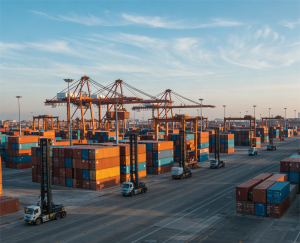
Geography adds another layer. South Africa sits at the junction of the Atlantic and Indian Ocean trade routes, with time-zone alignment overlapping Europe and parts of Asia. In an environment where logistics resilience and route diversification are gaining importance, location becomes a practical advantage rather than a theoretical one.
There is also institutional memory. South Africa has decades of experience operating complex industrial systems, managing large-scale capital projects, and integrating into global supply chains.
While governance challenges are real, the country continues to offer depth in skills, professional services, and legal frameworks that reduce uncertainty for international counterparties.
Taken together, these factors explain why global interest often focuses on South Africa specifically, rather than Africa in general. Many countries have resources; far fewer offer resources, infrastructure, capital markets, and institutional familiarity in the same place.
How strategic relevance translates into influence
Strategic relevance rarely expresses itself through single announcements or decisive moments. It tends to work through quieter channels over time. Countries that matter to global supply chains are more likely to feature consistently in long-term procurement decisions, capital-allocation frameworks, and investment mandates that prioritise reliability over short-term return.
They are also more likely to remain included in global benchmarks and investment universes, even as capital becomes more selective.
For South Africa, this influence is unlikely to appear as dramatic inflows or sudden shifts. More realistically, it contributes to resilience – reducing the risk of exclusion, supporting continuity of investment relationships, and anchoring relevance during periods when global conditions tighten.

How global competition shows up in markets
Strategic competition rarely appears directly and is more often reflected through market movements. Capital flows become episodic rather than steady, currencies react more sharply to shifts in sentiment, and asset prices reflect not only fundamentals but narratives around access, alignment, and risk.
For South African investors, these dynamics are most visible through market volatility and exchange-rate movement, which can feel domestic even when driven by forces far removed from local conditions. The risk lies not in volatility itself, but in mistaking volatility for direction.
What constructive outcomes could look like
If managed with consistency and credibility, South Africa’s strategic relevance does not need to translate into dramatic change to be meaningful. More plausible outcomes include sustained inclusion in global
capital-allocation decisions, deeper integration into diversified supply chains, and greater resilience during periods of global stress.
Rather than sharp gains or sudden shifts, the benefit is more likely to be incremental – steadier investment relevance, improved access to capital over time, and a clearer role within an increasingly selective global system.
What this means for South African investors
For South African investors, the implication is not to react to headlines or speculate about geopolitical intentions. It is to recognise that global competition can amplify both opportunity and risk, often in
unpredictable ways. This reinforces the importance of disciplined diversification, robust portfolio construction, and governance-led decision-making. In an environment where long-standing assumptions may be tested, preparation matters more than prediction, and structure matters more than conviction.
A grounded conclusion
South Africa’s relevance in a more competitive world is neither theoretical nor guaranteed. It rests on tangible assets – critical minerals, infrastructure, financial depth, geographic position, and institutional familiarity – that are increasingly scarce elsewhere. These assets attract attention, but attention alone does not determine outcomes.
Perhaps there was some other long-term rationale in Mr Trump’s provocation of South Africa in his
allegations of genocide and refugees…?
What ultimately matters is how consistently and credibly these threats – and opportunities – are managed. For investors who have placed their trust in GTC’s advisory capabilities, portfolio construction, and long-term perspective, you can look forward to objective focus. The task is not to assume advantage or fear exposure, but to remain anchored to sound structures and clear thinking. In a world where long-standing conventions may be challenged, discipline and perspective will matter far more than speculation.