
Applying lessons we probably learned in pre-primary school
Distinctly remembering being a little 5-year-old playing in the sandpit under the Cyprus trees in my pre-school creche, I recall being evicted from the pit by a much bigger 5-year-old. Perhaps more importantly I remember my dad impressing upon me that the only way to halt a bully was to stand up to him.
Mark Carney’s speech at Davos and its lessons for South Africa
Canadian Prime Minister Mark Carney’s speech at Davis in January 2026 is being hailed as a landmark address. It surely has profound implications for developing countries, and hopefully South African policy makers and leaders have watched or read it.
Carney stated that the last year has seen ‘a rupture in the world order’ and further proposed that the idea of a fair global system was always somewhat false, in that larger and wealthier powers often exempted themselves from the rules when it was convenient. It echoed what some in the ‘Global South’ have been saying for decades: that international law and trade rules have often been applied asymmetrically by larger developed countries and blocs to benefit themselves.
While he didn’t name anyone or any country specifically, Carney’s criticism was primarily aimed at the two world powers that have repeatedly applied coercive tactics, not only to rivals, but also to neighbours and allies: Trump’s United States and Putin’s Russia. He didn’t spare Western nations either, accusing them of hypocrisy and bias, where they continued to adhere to the supposed rules-based order out of convenience, habit, or a lack of courage or credible alternatives.
Carney noted that the Superpowers present the ‘law of the strongest’ as an inevitable, where the weak must suffer and submit. Addressing Europe and other middle powers directly, he proposed that they have the resources to overturn this pattern if they build ‘coalitions that work’.
The quote from that speech that is now being repeated around the world is ‘If you’re not at the table, you’re on the menu…’
By this he meant that second tier and smaller nations are being treated as tools or targets, subjected to tariffs as leverage. Supply chains and finance are being used as a mechanism of coercion. As South Africa has found to its cost, negotiating bilaterally with the US, instead of as a member of a stronger coalition has not produced any desired results.
So, what is Carney’s proposal and how should South Africa react to it?
Firstly, he noted that nations need to accept that the old-world order has changed profoundly. ‘Nostalgia is not a strategy’, he wryly commented. He implored world leaders to move beyond reactive damage control and start shaping a more co-operative and resilient world order.
He noted that ‘the multilateral institutions on which the middle powers have relied – the WTO, the UN, and the COP – the very architectures of collective problem solving are themselves under threat.’
He proposed a new system of rules and practices based on shared values – honesty, human rights, sustainable development and territorial integrity, suggesting that middle powers form flexible, ad hoc coalitions to balance and steer superpowers towards more reasonable behaviour. He further noted that this would require acting consistently and ‘applying the same standards to allies and rivals’.
As a prudent, and successful ex-Governor of the Bank of England, Carney suggested that each nation needs to both build a strong domestic economy and diversify their economic and political relationships – resulting in them becoming more resilient and better able to resist coercive tactics.
South Africa sees itself as an important geopolitical actor on the world stage through its membership of both BRICS and the G20, though it is questionable as to how much benefit has been derived from being a junior member of these groupings.
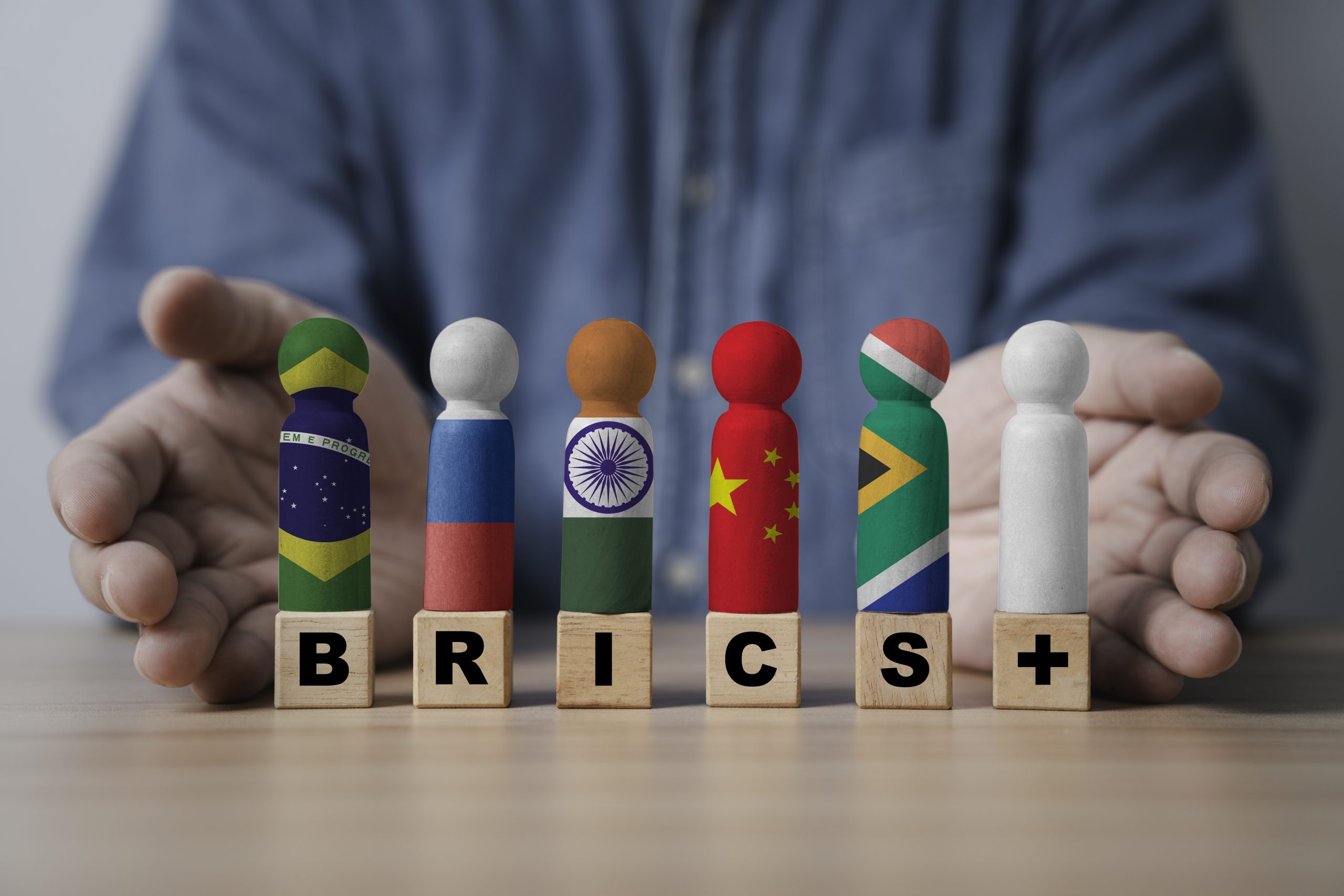 South Africa needs to embrace Carney’s vision of ‘Variable Geometry’. Instead of depending on rigid alliances such as BRICS, South Africa should enter coalitions that form around specific issues (climate, digital standards, and health), allowing both South Africa and other developing countries to join forces with ‘middle powers’ (Canada, Brazil, France, and Australia) to gain collective bargaining power. China and Russia (as primary BRICS nations) view themselves as superpowers and often act only in their own interests.
With reference to China, the US, and to Europe, Carney’s speech suggests that South Africa (and other developing countries) should move away from being extractors and instead enhance their own domestic industrial bases. Nine of the twelve fastest growing countries in the world forecast for 2026 are in Africa. South Africa should be looking to establish regional hubs for manufacturing, trade, finance and energy, instead of leaving it to China and the West to develop partnerships and trade in Africa.
Our country has reaped an extraordinary windfall in the last year through high precious metal prices. It is hoped that our government uses this windfall to take Carney’s advice and invest in the South African economy and diversify our sources of income and trading partners. Carney spoke of Canada ‘fast tracking investments in energy, AI, critical minerals, new trade corridors and beyond… in ways that build domestic industries’. We need to do likewise.

South Africa also needs to move away from the nostalgia of blindly supporting nations it perceived to be allies in the struggle against apartheid (Russia). Part of subscribing to a new co-operative middle power world order means having a principled and consistent foreign policy.
In essence, the leadership of our country needs to engage with a multiplicity of countries, both in Africa and worldwide and start building a novel, more pragmatic coalition based on shared interests and shared values. This engagement presents an opportunity for South Africa to move from being ‘policy takers’ to ‘policy makers’. A visit to Carney’s office would be a good place to start.